Vita Virdi Squeeze Page Design
Background
Vita Virdi, a wellness-focused brand, wanted to improve their conversion rates through the introduction of a dedicated squeeze page. This page would serve as a critical entry point for capturing user interest, and driving conversions. My role as a UX designer on this project was to transform approved marketing content into a high-performing squeeze page that upheld the brand’s aesthetic while trying to increase the site engagement and conversion rates.
This project took place in July 2025, over four days.
Problem
The marketing team identified a drop-off in user engagement when transitioning from ads and social media campaigns to general product pages. To solve this, the team proposed a squeeze page that would:
Capture user attention within the first few seconds.
Clearly communicate Vita Virdi’s product and lifestyle value proposition.
Minimize distractions and friction during the conversion process.
Solution
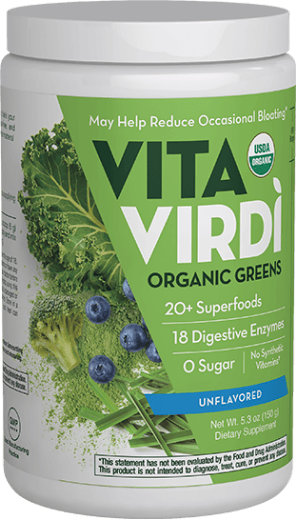
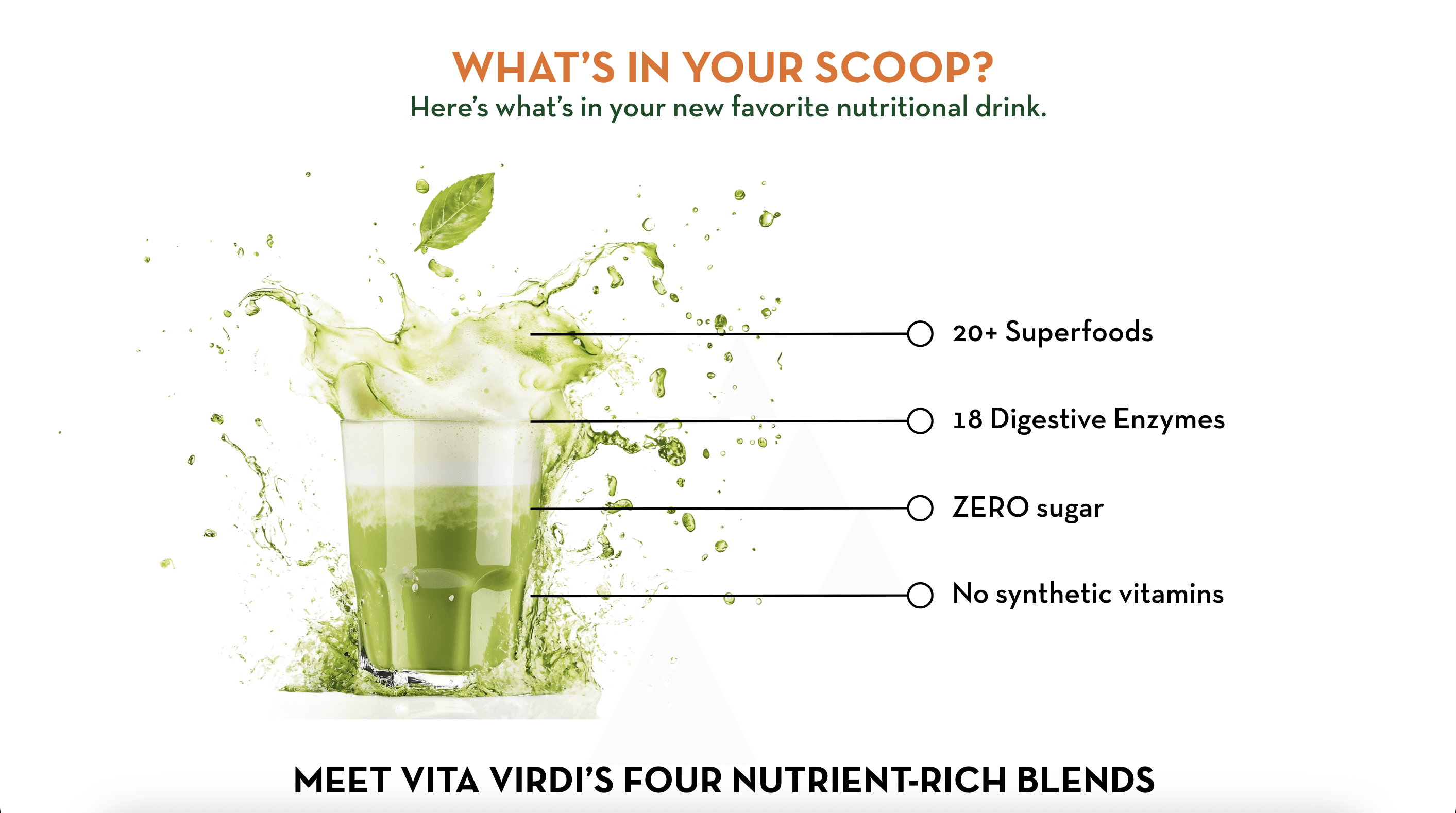
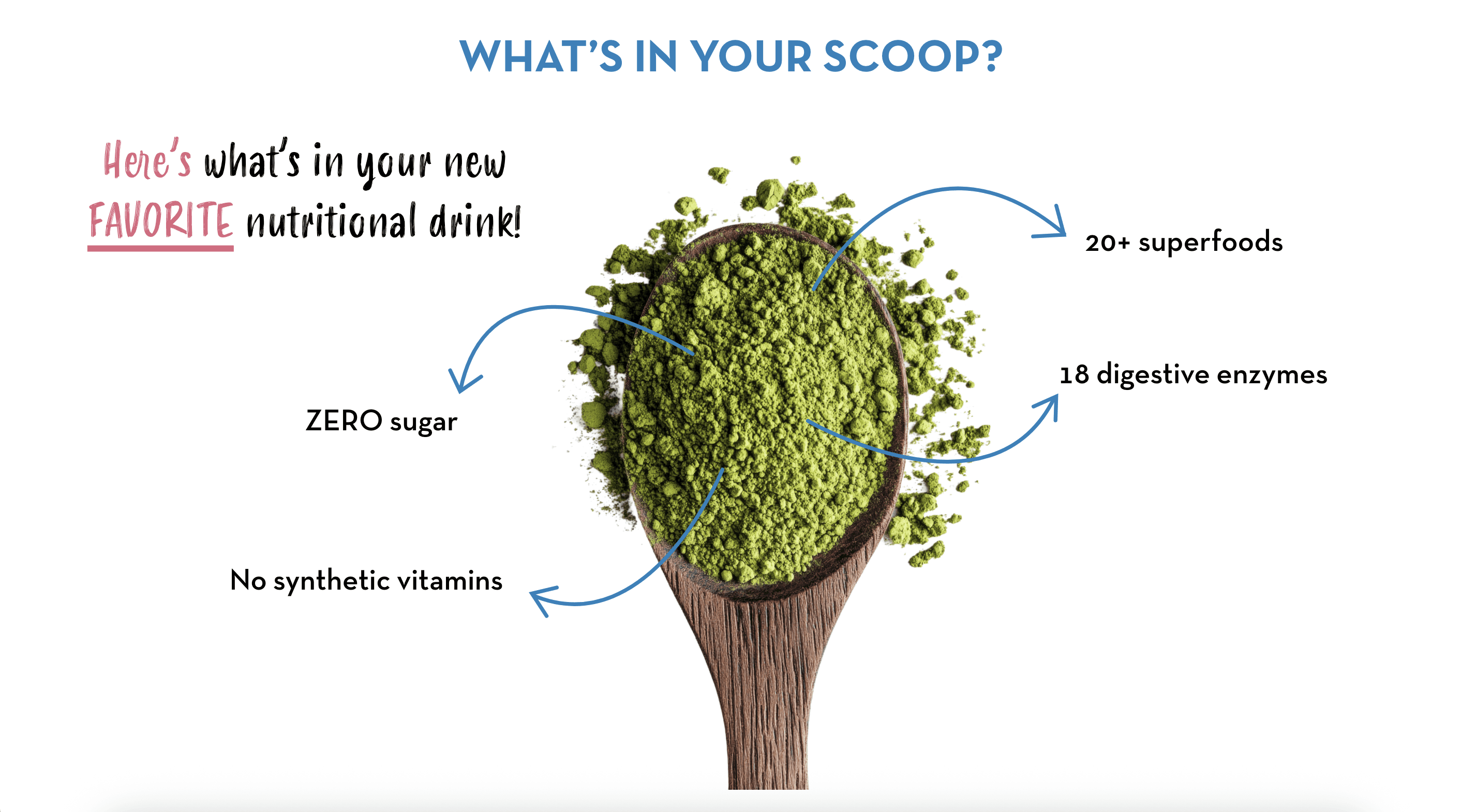
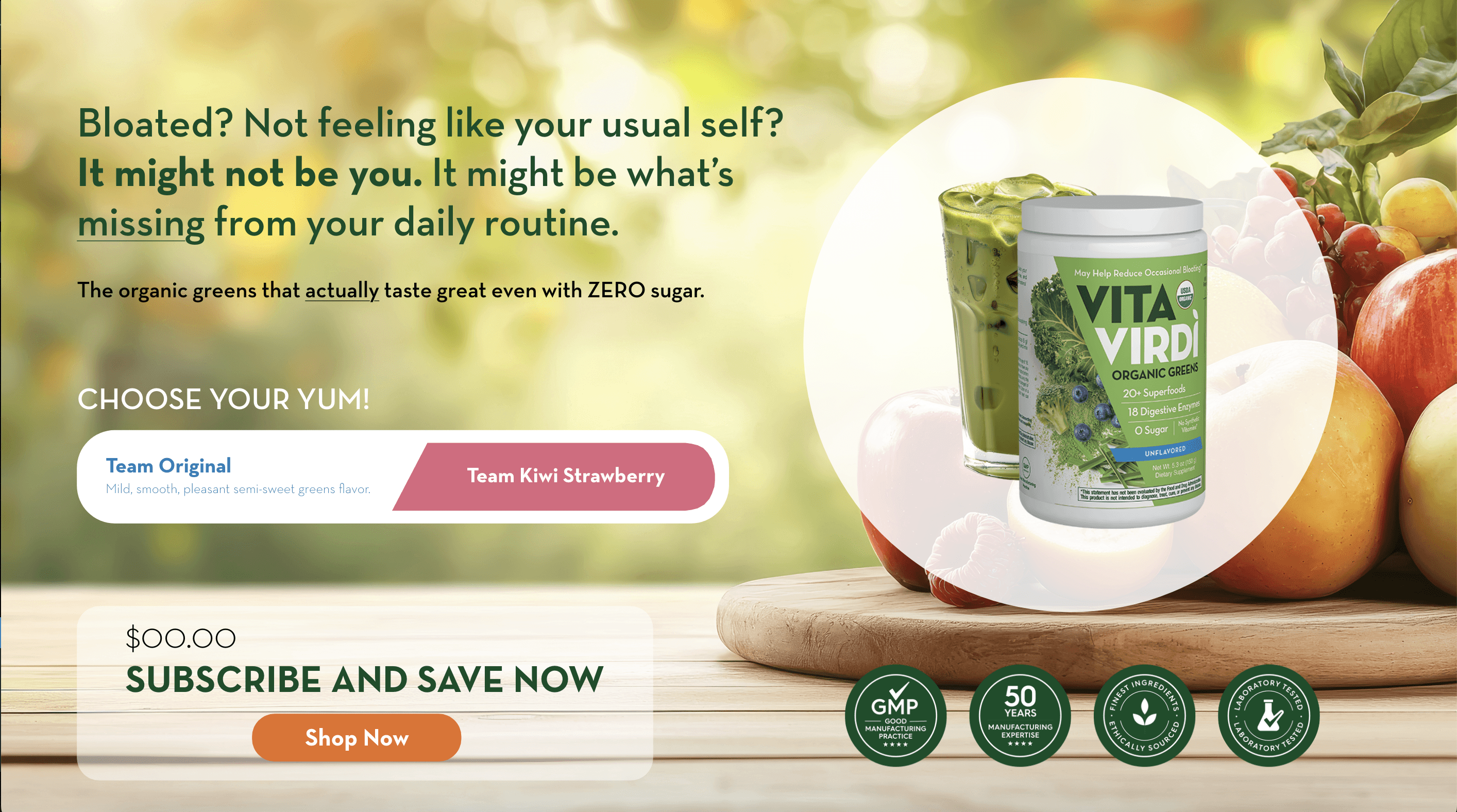
I worked on creating two developer-ready designs that could be implemented quickly, while keeping the brand's vision in mind. Version A was meant to be deployed rapidly, while Version B kept intitial criticisms and feedback in mind while implementing a site that highlighted more contrast. My iterations led to a page with clearer value proposition, stronger CTA hierarchy, and an overall more appealing experience.
Research
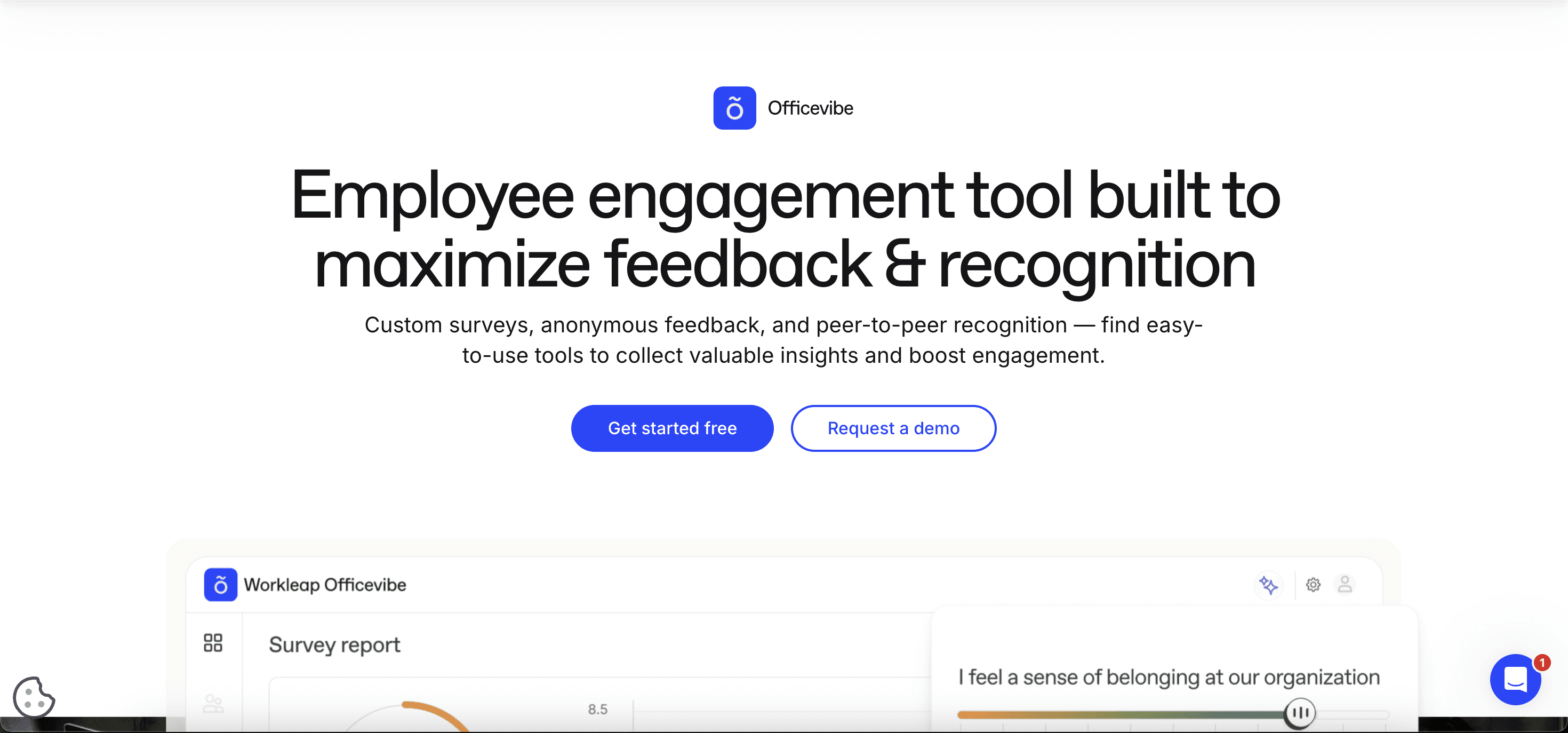
I began by looking at other good examples of squeeze pages to assess competitor benchmarks, focusing specifically on sites with well-contrasted CTAs and less graphics-heavy content, so as to not confuse users who aren't sure about converting yet. I really liked the appeal of Officevibe's bright blue CTAs against the white background, but I wanted to incorporate the different colors of Vita Virdi's brand, as well as their flavor colors.
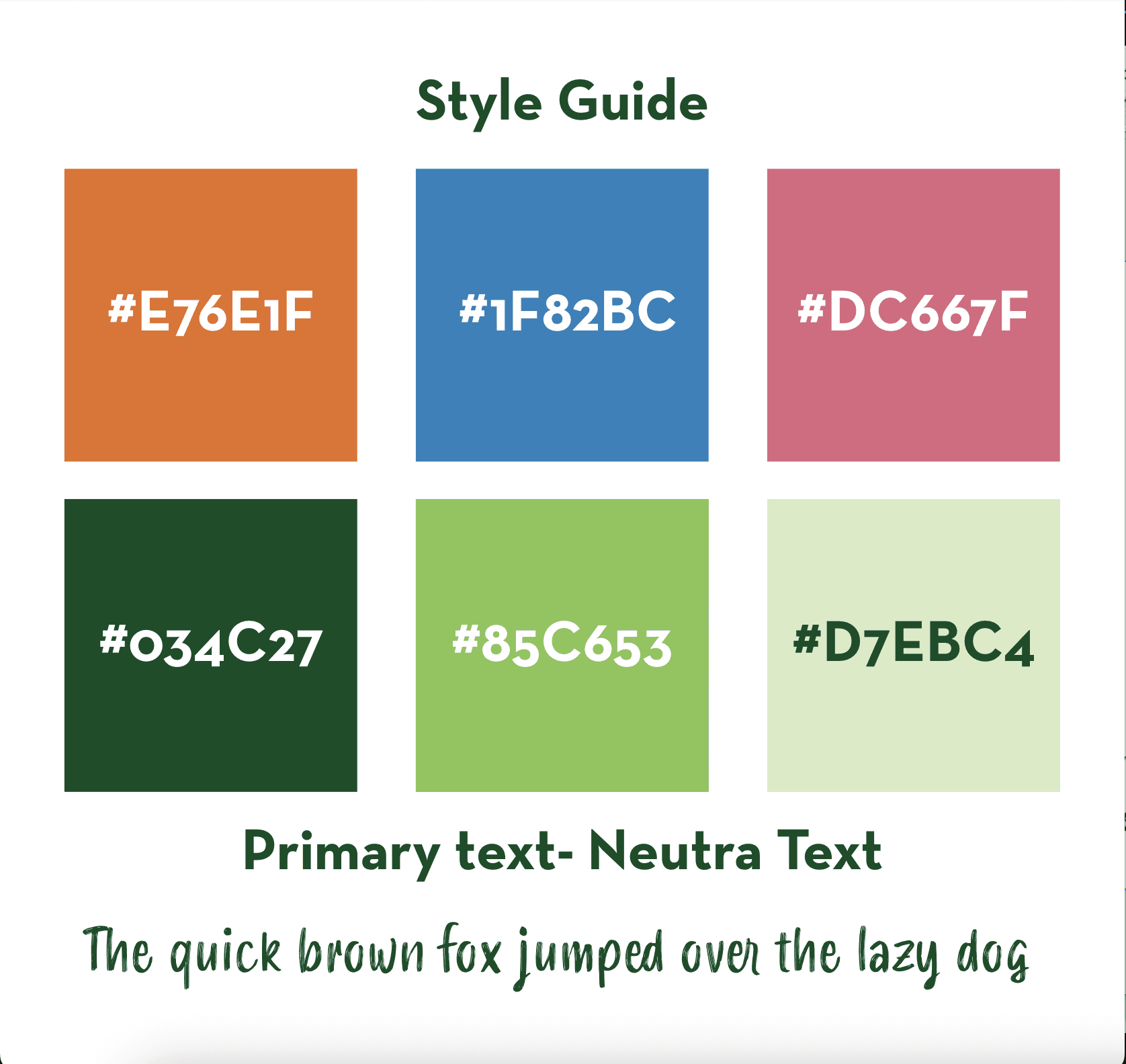
I also began to compile a style guide so I understood the brand colors, both primary and secondary. I kept Neutra Text- the same font used in the logo- to be maintained as the primary font, and paired it with Smoothy in my second iteration of the squeeze page to increase contrast between the text and capture more viewer interest. I listed the most important elements to include from my research:
scannable layouts
visual anchors
trust signals
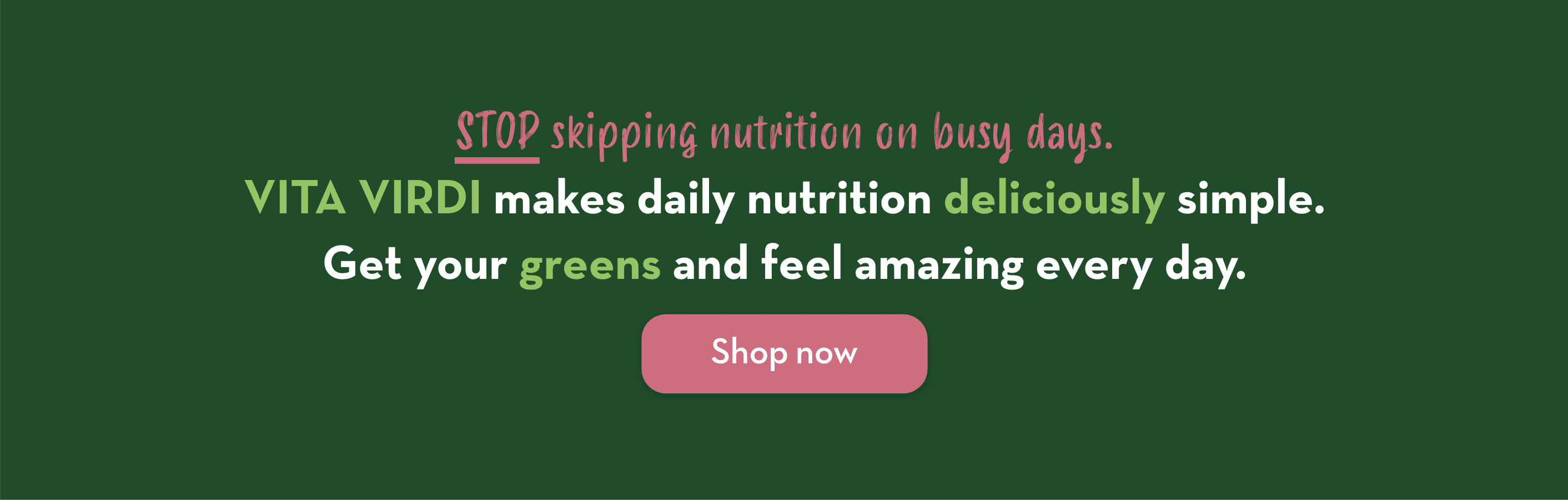
high-contrast CTAs
Designs
After the marketing team approved a copy of the content for the squeeze page, I iterated multiple hi-fi versions quickly, incorporating feedback from my supervisor. I focused on breaking up the content into short-form, easy to absorb paragraphs and adjusting the CTA buttons' size and placement to draw more attention to it.
Key Improvements
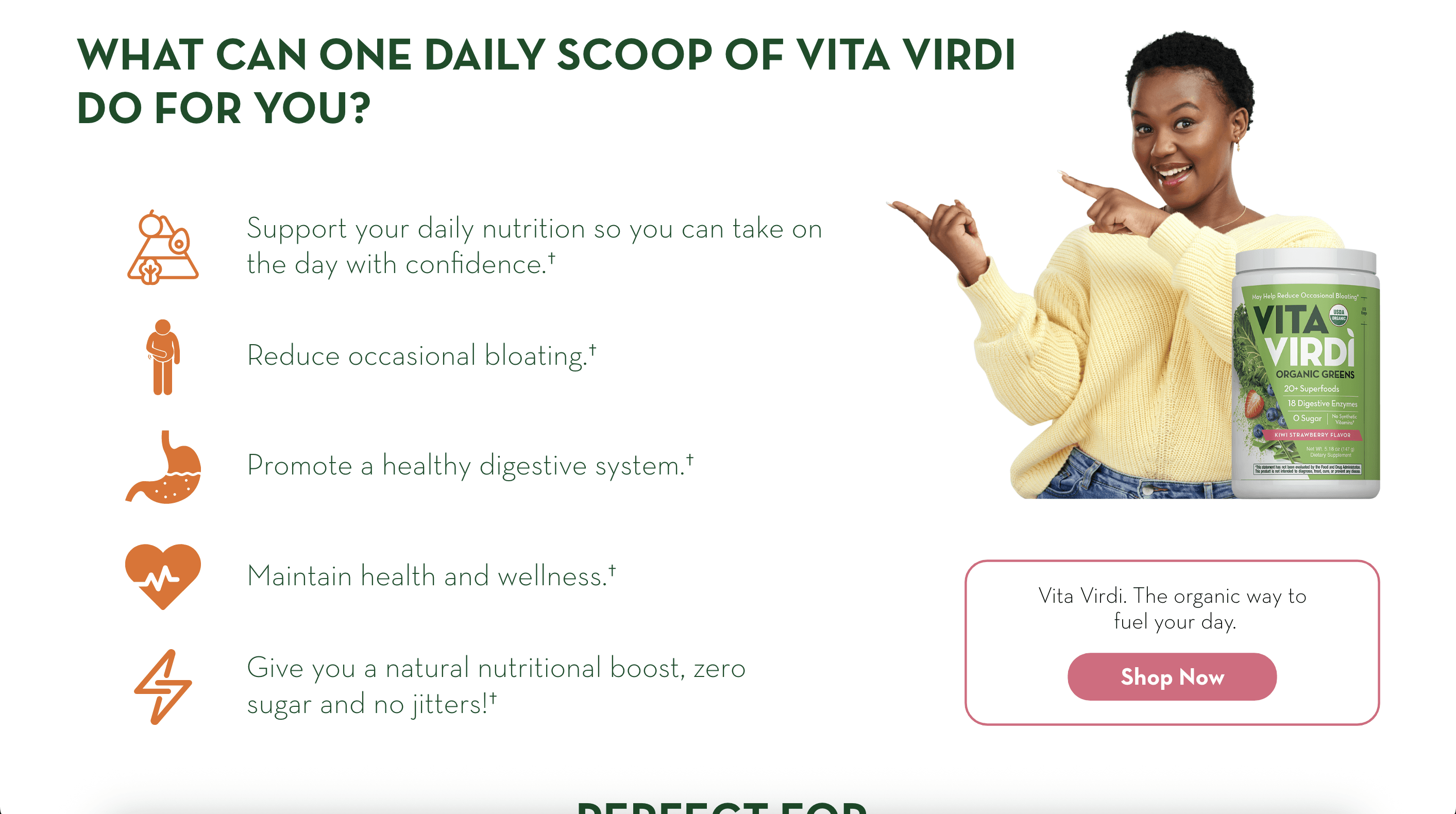
1. Reducing Reliance on Stock Images
Issue with Version 1: The page leaned heavily on stock imagery that felt generic and undermined the page authenticity.
Why this matters: Studies show that generic stock images significantly decrease perceived trust. For instance, only 33% of users in a Digifox Consulting study trusted pages with generic images. Furthermore, websites featuring authentic imagery reported 83% greater consumer trust, compared to those relying on stock photos.
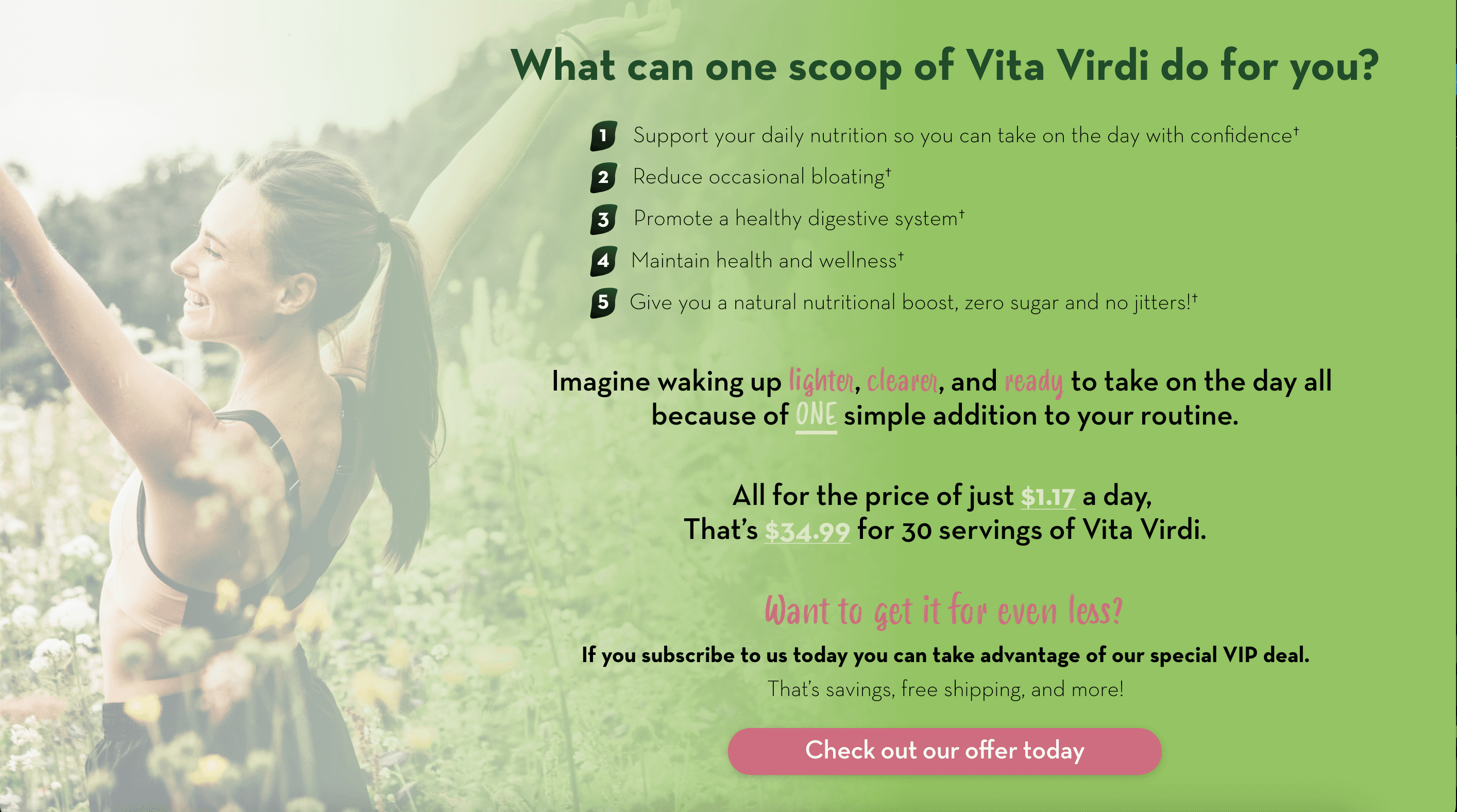
Design action: In Version 2, I replaced the generic visuals with bold colors and modified the site to use a more minimalist aesthetic.
2. Introducing a Contrasting Secondary Font
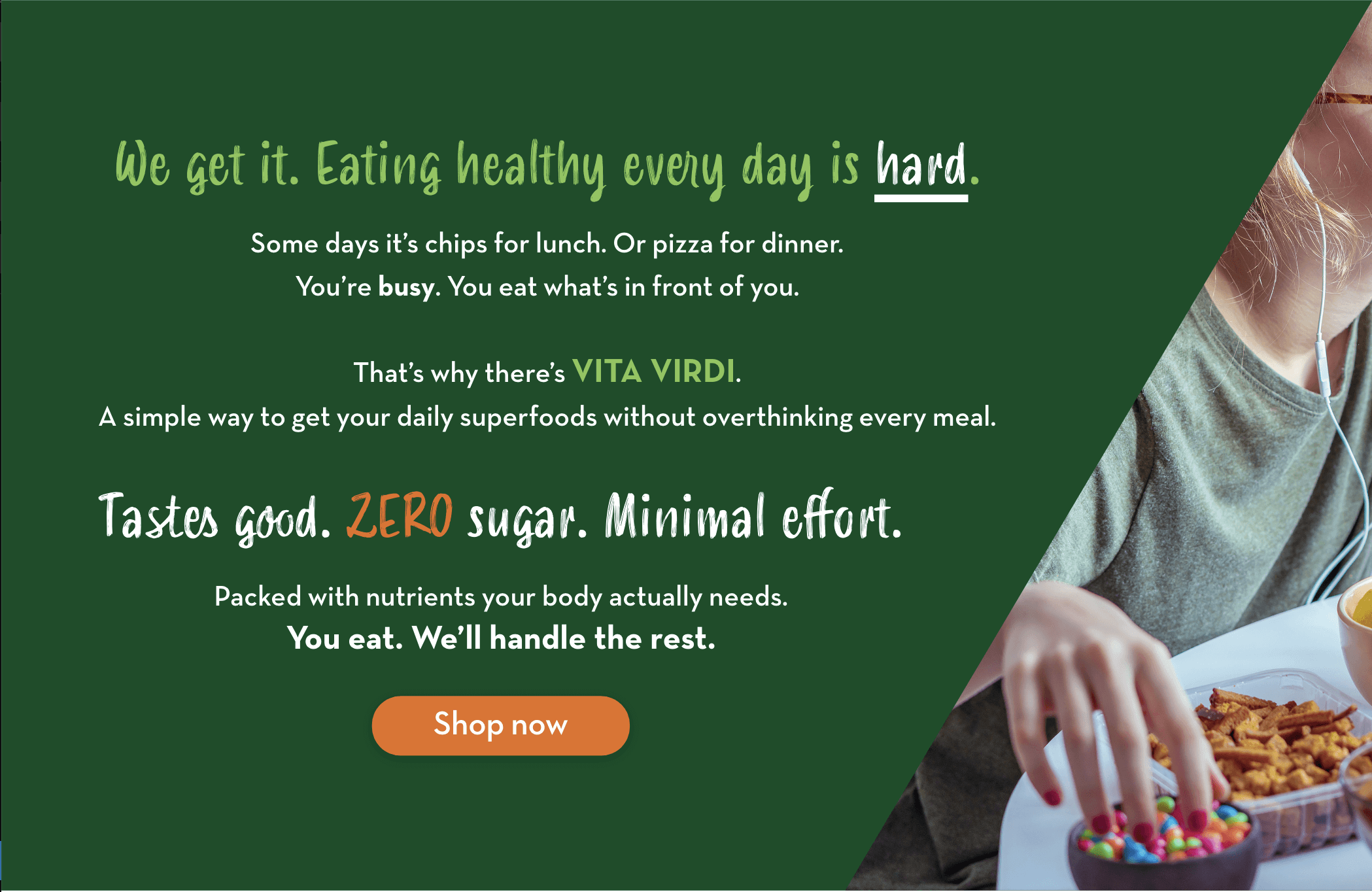
Issue with Version 1: The sentence hierarchy felt flat, lacking visual differentiation, looking a little boring and more likely to lose attention.
Design action: I added Smoothy as a secondary, contrasting font alongside Neutra Text. This enhanced the visual clarity by elevating key messaging and CTA elements.
3. Reducing Use of Gradients
Issue with Version 1: Heavy gradient overlays introduced diluted contrast, making important elements like CTAs less prominent.
Design action: I minimized gradients—leaning instead on flat color contrast and typographic hierarchy. This choice sharpened the visual focus, improved hierarchy clarity, and made CTAs stand out more decisively.

Reflections
Typography is brand identity in action: Strategic font pairing created visual contrast without losing authenticity.
Iteration drives measurable improvement: Feedback loops and refinement of CTA clarity significantly improved the design’s effectiveness.
Design flexibility supports agility: Offering two distinct versions empowered developers to act quickly while keeping room for A/B testing and future optimization.